The Endocannabinoid System: the balance at work within us
Within our body, a complex biological network continuously works to help us adapt to changes and maintain balance.
It's called the Endocannabinoid System, or ECS, and it's involved in numerous processes related to our daily well-being: sleep, stress response, pain perception, mood, appetite, metabolism, and immune response.
It's not a system that only kicks in when something is wrong. It's active every day, often without us realizing it, contributing to the body's natural ability to regulate itself and restore its internal balance.
In physiology, this dynamic equilibrium is called homeostasis.
And this is where we want to start: not from CBD, not from cannabis, but from how our body functions when it tries to be well.

A regulatory network, not a single switch
The Endocannabinoid System is not an organ and does not perform a single function. It is a biological communication network distributed throughout the body, composed of molecules naturally produced by our body, receptors, and enzymatic systems that work together.
Among the most studied endocannabinoids are anandamide and 2-AG, while the best-known receptors are CB1 and CB2. These elements participate in a continuous dialogue between the brain, nervous system, immune system, and other tissues.
The most interesting thing is that the ECS does not work in isolation. It interacts with numerous other systems and helps adapt the body's response based on what is happening, both internally and externally.
This is why today it is considered one of the most important networks involved in maintaining homeostasis, that is, the body's ability to regain balance even when stress, sleep, pain, diet, or environment change.
In other words, the Endocannabinoid System does not impose a fixed state: it helps the body to continuously adapt.

Why it concerns our well-being so closely
When we talk about well-being, we often tend to think of something that comes from outside: a product, a supplement, a therapy, or a new habit.
The Endocannabinoid System, however, reminds us that a fundamental part of well-being comes from our body's ability to regulate itself, adapt, and regain balance.
Sleep, stress, pain perception, mood, appetite, metabolism, and immune response are not completely separate functions. They continuously influence each other, and the ECS precisely participates in this communication network.
This is why a period of stress can affect sleep, insufficient sleep can alter pain perception, or an inflammatory state can reflect on our overall balance.
The Endocannabinoid System thus helps us to view well-being more broadly: not as a sum of individual problems, but as the result of biological systems that continuously interact with each other.
Where CBD comes into play
CBD does not replace the endocannabinoids naturally produced by our body and does not simply "turn on" CB1 and CB2 receptors. Its relationship with the Endocannabinoid System is much more complex.
Cannabidiol can in fact indirectly influence the activity of the ECS, intervening in the mechanisms that regulate the availability and action of some endocannabinoids, and simultaneously interact with other biological pathways involved in the body's balance.
This is precisely one of the most interesting aspects of CBD: it does not work on a single target. Research studies its interactions with systems like TRPV1, serotonin 5-HT1A, adenosine, PPAR, and GPR55, in addition to its relationship with endocannabinoid signaling.
This multi-target behavior helps to understand why CBD is studied in seemingly very different fields and why it is more accurate to consider it a modulating molecule, rather than simply associating it with cannabis.
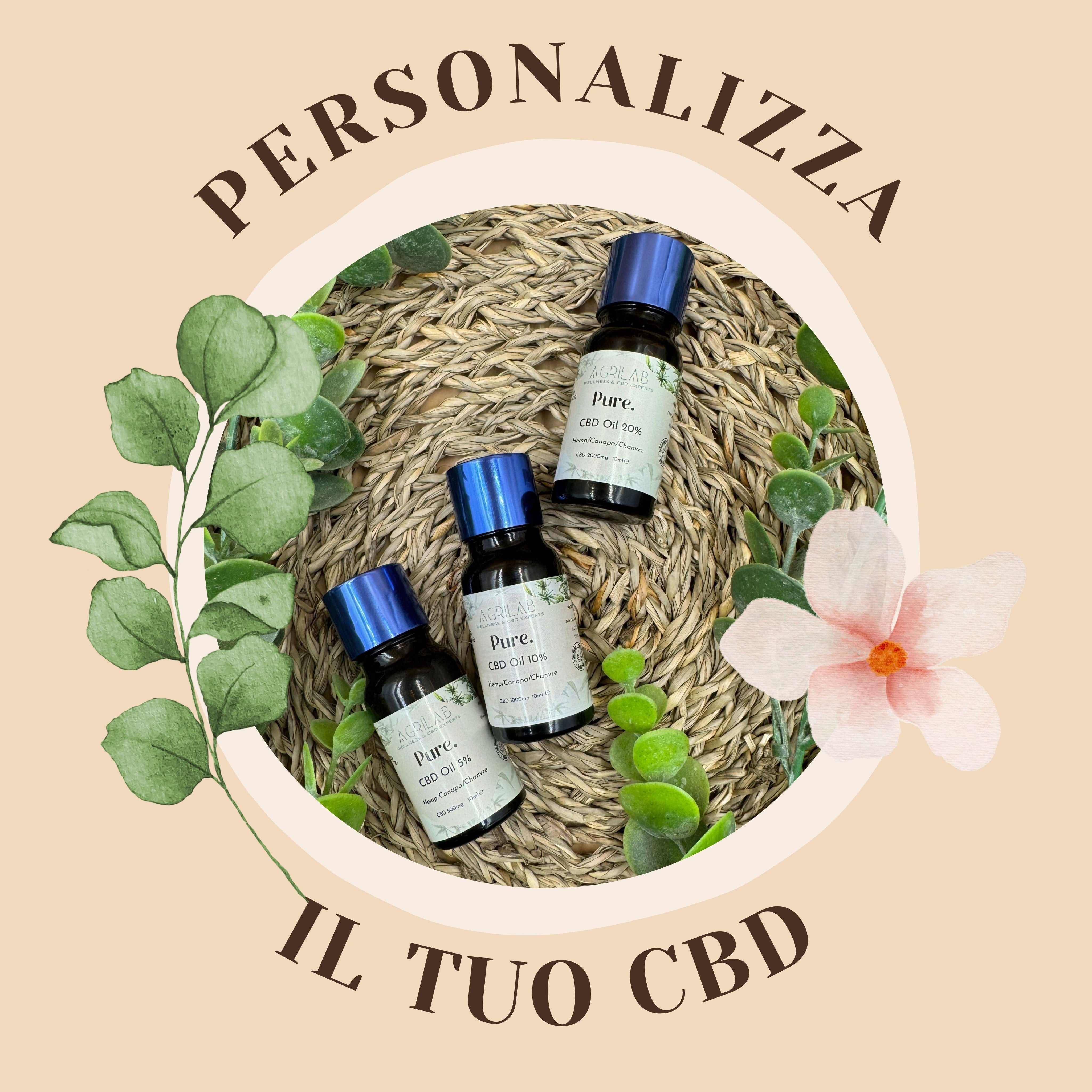
For AgriLab, this is also why we have chosen to focus on isolated CBD: studying a defined molecule allows us to better understand its interactions and work with a more controlled composition.
CBD does not take the place of the body's natural balance: it can interact with the systems that help maintain it.

What research tells us
The discovery of the Endocannabinoid System has opened a new way of observing some of the body's main regulatory mechanisms.
In recent decades, research has identified cannabinoid receptors, naturally produced endocannabinoids, and enzymes responsible for their synthesis and degradation, showing how this network participates in the regulation of numerous physiological processes.
Today, the ECS is studied in very different fields — from neurobiology to immunology, from metabolism to pain perception and stress response — precisely because its role seems to be primarily to contribute to the body's adaptation and balance.
CBD has also become an object of great scientific interest because its behavior is not limited to cannabinoid receptors. Research studies its interaction with various biological pathways, helping to reveal a model that is increasingly less based on the concept of "one molecule, one effect" and increasingly oriented towards complex and interconnected systems.
This is the vision that interests AgriLab: to better understand the mechanisms of balance to develop an increasingly conscious approach to well-being.
As a small, separate closing from the text, I would add:
Research continues. And with it, our understanding of well-being also evolves.
Balance, not perfection
Well-being does not mean that the body must always remain the same or perfectly stable. It means having the ability to adapt to changes, compensate for imbalances, and rediscover one's internal harmony.
This is precisely the logic that makes the Endocannabinoid System so interesting: it does not work to impose a fixed state, but continuously participates in regulating what changes within and outside of us.
Stress, sleep, pain, emotions, nutrition, movement, and the environment are all part of the same dynamic equilibrium. This is why at AgriLab we prefer to talk about well-being as a journey, not as an immediate result.
Better understanding how our body works also means learning to listen to it with greater awareness and choosing tools that are more consistent with one's needs.
Well-being arises from balance. And balance arises from listening.